Rug materials and what each one needs
Material decides everything about how a rug gets cleaned. Getting it wrong is the most expensive mistake in this trade, and it is why identification happens before anything else.
Calls answered 7am to 8pm · same-day service usually available
Send a photo of the rug and the back of it. We can usually narrow it down before visiting.
Synthetics
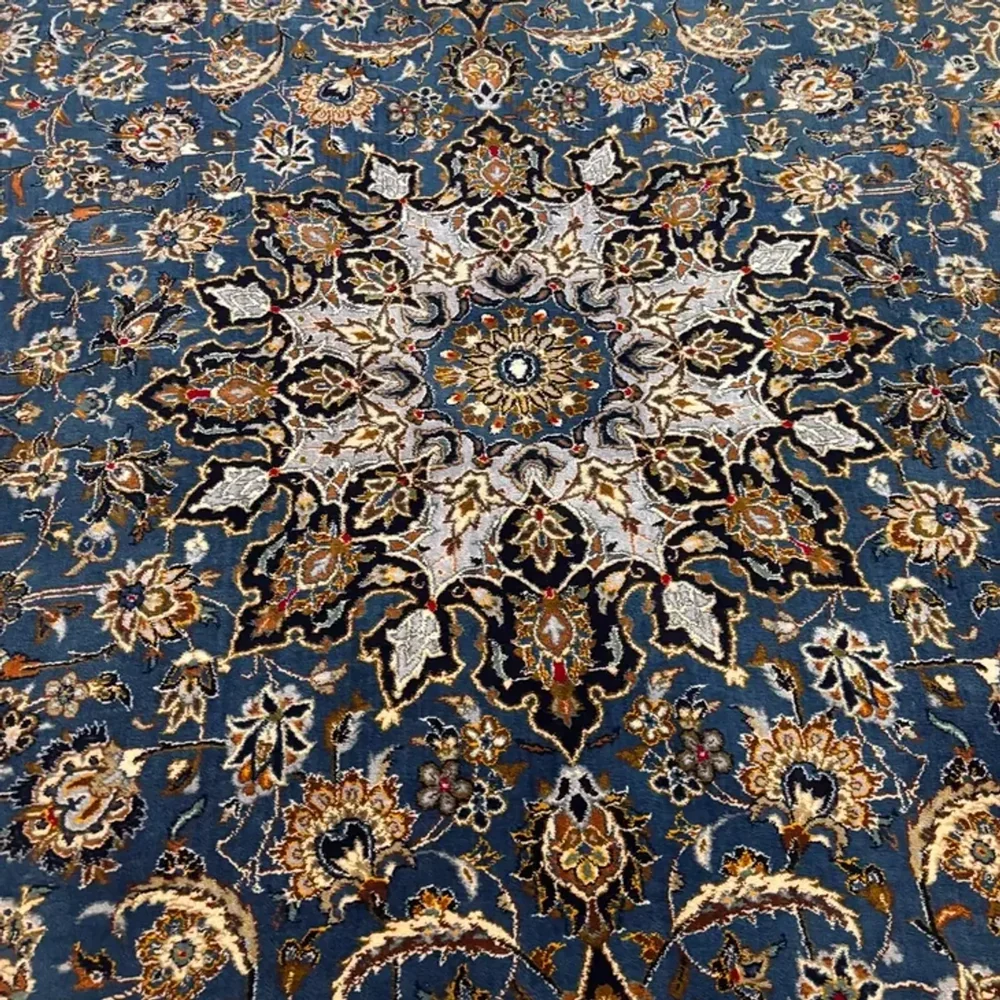
Nylon, polyester, polypropylene and blends of them. The forgiving end of the spectrum and the majority of what is actually on floors day to day.
They take water and heat well, they do not shrink, dyes are generally stable, and they clean up predictably. A machine-made synthetic rug carrying traffic soil is close to an ideal in-home candidate.
The one thing worth knowing is that polypropylene in particular is oleophilic, meaning it attracts oil. So a synthetic rug in a kitchen or entry can look greasy in the traffic path rather than merely dirty, and that needs pre-treatment aimed at oil rather than general soil.
Wool
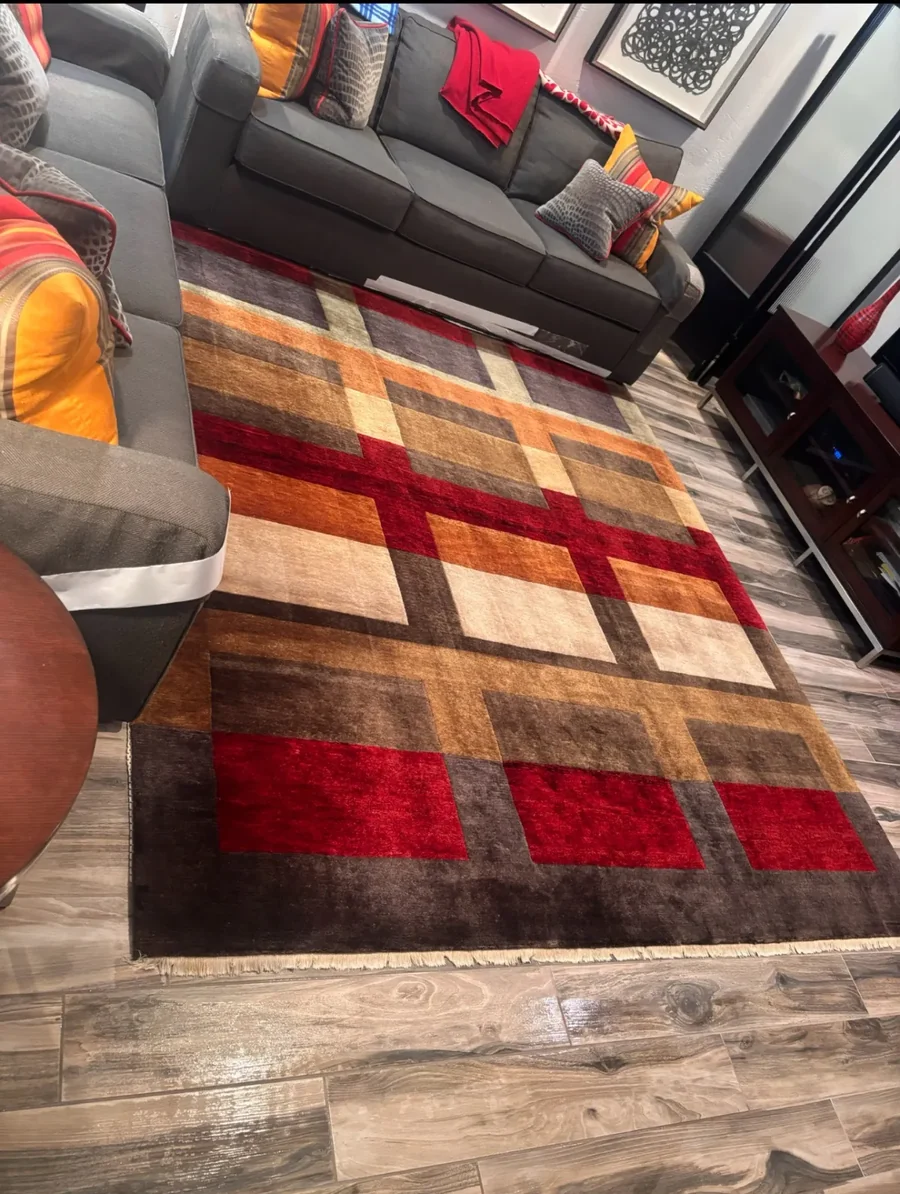
The most common natural fiber in a rug and the one that rewards careful handling.
Wool browns if it gets over-wet. The fiber holds compounds that travel to the surface as it dries and oxidize there, producing a yellow-brown discoloration that is a reaction in the fiber rather than a stain on it. It cannot be cleaned off afterward, which is why moisture control matters more on wool than on anything else.
Wool is also sensitive to high-pH cleaners. Alkaline chemistry damages the fiber structure, dulls it and can affect dye. This is where most wool damage comes from, and it is usually a company using its carpet chemistry on a wool rug.
And wool holds more soil by weight than anything else. A wool rug that looks moderately dirty is holding considerably more than a synthetic that looks the same. That is why it takes longer and prices higher.
Viscose
The one to be genuinely careful with, and the reason it has its own page.
Sold as art silk, bamboo silk, faux silk or banana silk, all of which are viscose, which is processed wood pulp. It loses strength when wet, the pile distorts, and yellowing or browning is common even when handled carefully.
We do not clean viscose in the home. Full explanation and how to identify it here.
Jute, sisal and seagrass
Plant fibers, and they behave nothing like wool despite both being natural.
They shrink and brown with water, sometimes dramatically, and a jute rug that has been wet-cleaned can come back visibly smaller and permanently discolored. Most need dry methods only, and there is a real limit to what dry cleaning achieves on heavy soil.
If that is what you have we will say so and be honest about what is achievable rather than wetting it and hoping.
Cotton
Common in flatweaves and dhurries. It takes water reasonably well but dyes on cotton flatweaves are frequently less stable than people expect, particularly on hand-dyed pieces, so it gets a dye test before anything else.
Cotton also holds moisture longer than synthetic, so drying is the part to get right.
How we identify it
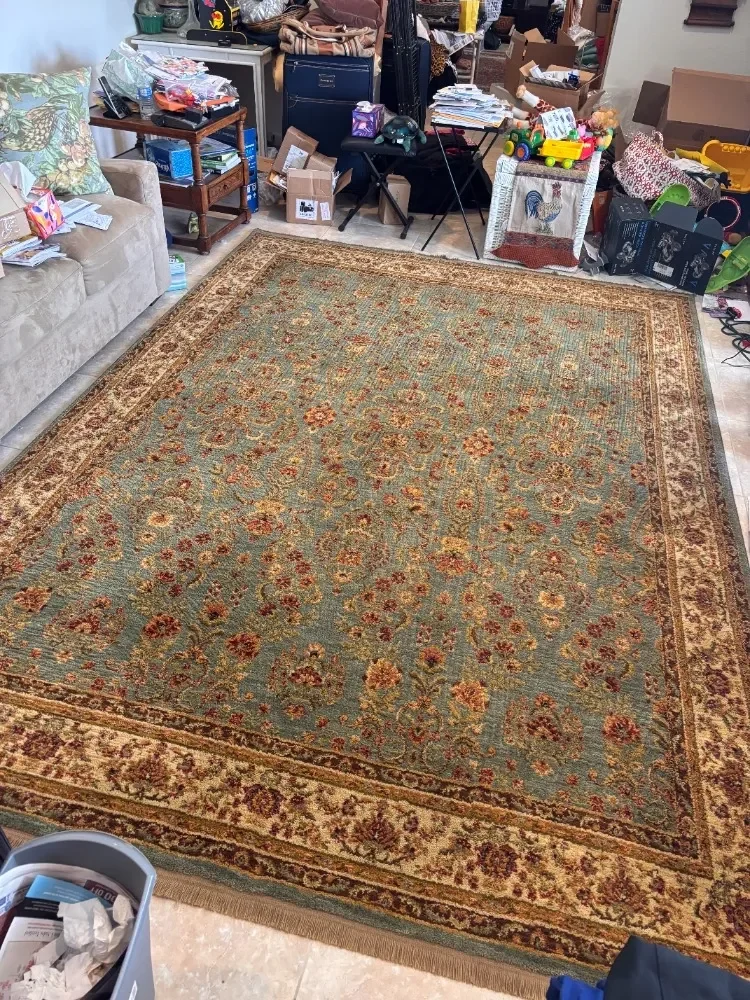
- By hand. Wool, synthetic and viscose feel genuinely different, and viscose has a distinctive slickness that gives it away.
- By how it takes light. Viscose has a high sheen that reads as silk from a distance and as something else entirely up close.
- By construction. Hand-knotted, hand-tufted and machine-made are all visible from the back, and they behave differently under moisture.
- By burn characteristics on a single fiber from a concealed edge, where there is real doubt. Wool self-extinguishes and smells of hair, synthetics melt, cellulose burns clean.
- By dye test in a concealed spot, which is the last check before any cleaning.
When you have the paperwork
Worth asking, because it saves all of the above.
If you still have the invoice, the showroom tag or anything from a designer specifying the rug, bring it out. Fiber content on paper removes the guesswork and lets us go straight to the right approach.
Most people do not have it, which is entirely normal. Identification is our job rather than yours.
Questions
How do I find out what my rug is made of?
We identify it during the inspection, by hand, by how the fiber takes light, by burn characteristics where appropriate, and by how the rug is constructed. If you still have the invoice or the showroom paperwork, that removes the guesswork entirely.
Why does material matter so much?
Because it determines the chemistry, the amount of moisture, and whether the rug can be cleaned in a home at all. Wool and synthetic need opposite approaches, and treating them the same is the most common way rugs get damaged.
Is wool harder to clean?
It needs slower, more careful handling and pH-appropriate chemistry, and it holds more soil by weight than anything else. That is why it prices higher, and it is work rather than a premium.
What about jute and sisal?
Natural plant fibers shrink and brown with water, so most need dry methods only. We will tell you if that is what you have and what can realistically be done.
Can you tell wool from synthetic by looking?
Usually, and we confirm rather than assume. Wool and good synthetics can look similar, and a wrong guess matters because the chemistry differs.
What if the rug is a blend?
Common, and it means treating the rug to its most sensitive component. A wool and viscose blend gets handled as viscose, which in practice means we will not clean it in the home.
Calls answered 7am to 8pm · same-day service usually available
The inspection is free and it happens before any decision about cleaning.