Area rug cleaning in Paradise Valley
Cleaned in your home. Synthetic $1.70/sqft, wool $2.975/sqft after 15% off. The material gets identified before anything touches the rug, and when a rug is not right for in-home work we tell you.
Calls answered 7am to 8pm · same-day service usually available
Tell us the rugs and rough sizes and we will price it on that call.
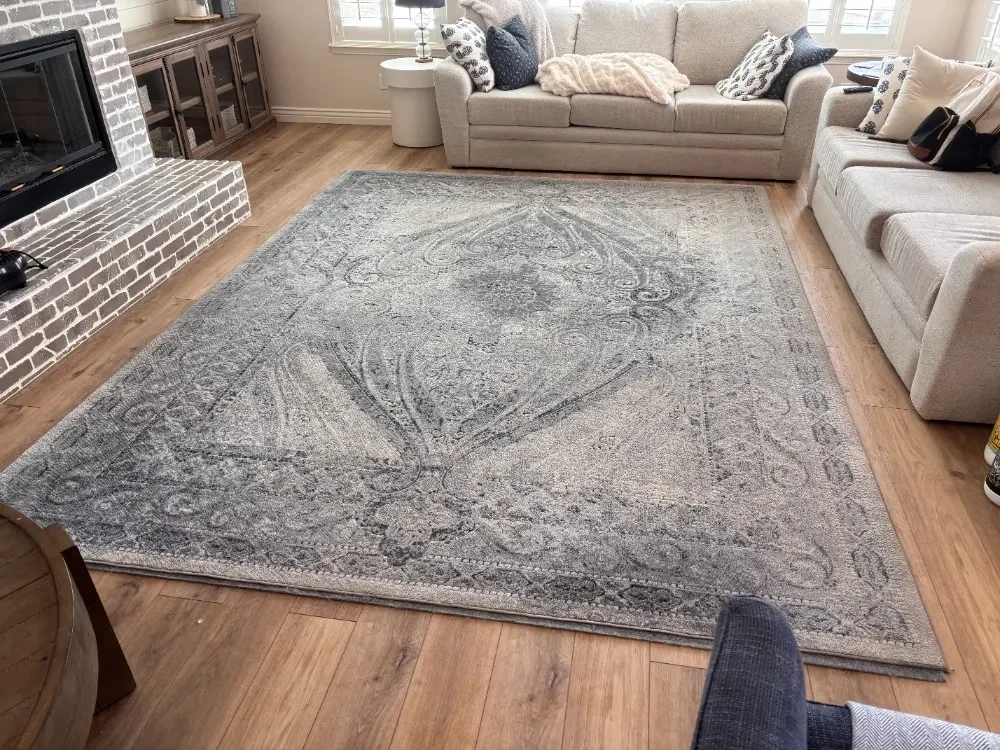
What it costs
| Rug | Rate | After 15% off | Notes |
|---|---|---|---|
| Synthetic | $2.00/sqft | $1.70/sqft | Nylon, polyester, polypropylene and blends |
| Wool | $3.50/sqft | $2.975/sqft | Slower handling and pH-appropriate chemistry, which is why it prices higher |
| Add-ons, per rug | Not discounted | Pet urine treatment, deodorizer, protectant, sanitizing | |
The 15% comes off the rug cleaning itself. Add-ons are charged at full rate, and you should read that here rather than work it out from an invoice.
$150 minimum per visit, applied after the discount. A standard 5x8 synthetic is 40 square feet, so $68. An 8x10 wool is 80 square feet, so $238.
Full pricing with rug sizes worked out.
We clean in your home, and we are straight about the limits
This matters more in Paradise Valley than almost anywhere, because the rugs here are frequently worth considerably more than the cleaning.
In-home cleaning works well for machine-made synthetics, low-pile rugs in decent condition, rugs that are simply soiled from traffic, and anything large or awkward enough that moving it creates more risk than leaving it. We use controlled moisture and extraction on site, with the furniture moved off the rug as part of the job.
In-home cleaning is the wrong answer for hand-knotted and antique rugs, for anything with known pet urine, for rugs with dye stability concerns, and for anything valuable enough that you would be genuinely upset if it came back wrong. Those need full immersion washing, a proper rinse and controlled drying, and none of that can happen responsibly on a living room floor.
When yours is in the second category we will tell you, and point you toward a specialist who washes rugs off site. That costs us the job and it is the entire reason to trust the rest of this page.
The material decides everything
More than size, more than how dirty it is, more than anything else. Getting it wrong is how rugs get ruined, and it happens most often to people who assumed one process suits everything.
- Synthetics are the forgiving ones. Nylon, polyester and polypropylene take water and heat well and behave predictably.
- Wool browns if it is over-wet and reacts badly to high-pH cleaners. It also holds more soil by weight than anything else, so it needs more work done carefully rather than quickly.
- Viscose is the one to be careful with. Sold as art silk or bamboo silk, and essentially processed wood pulp. It has its own page and we do not clean it in the home.
- Jute, sisal and seagrass shrink and brown with water. Most need dry methods only.
If you do not know what you have, that is completely normal and we identify it during the inspection. Full guide here.
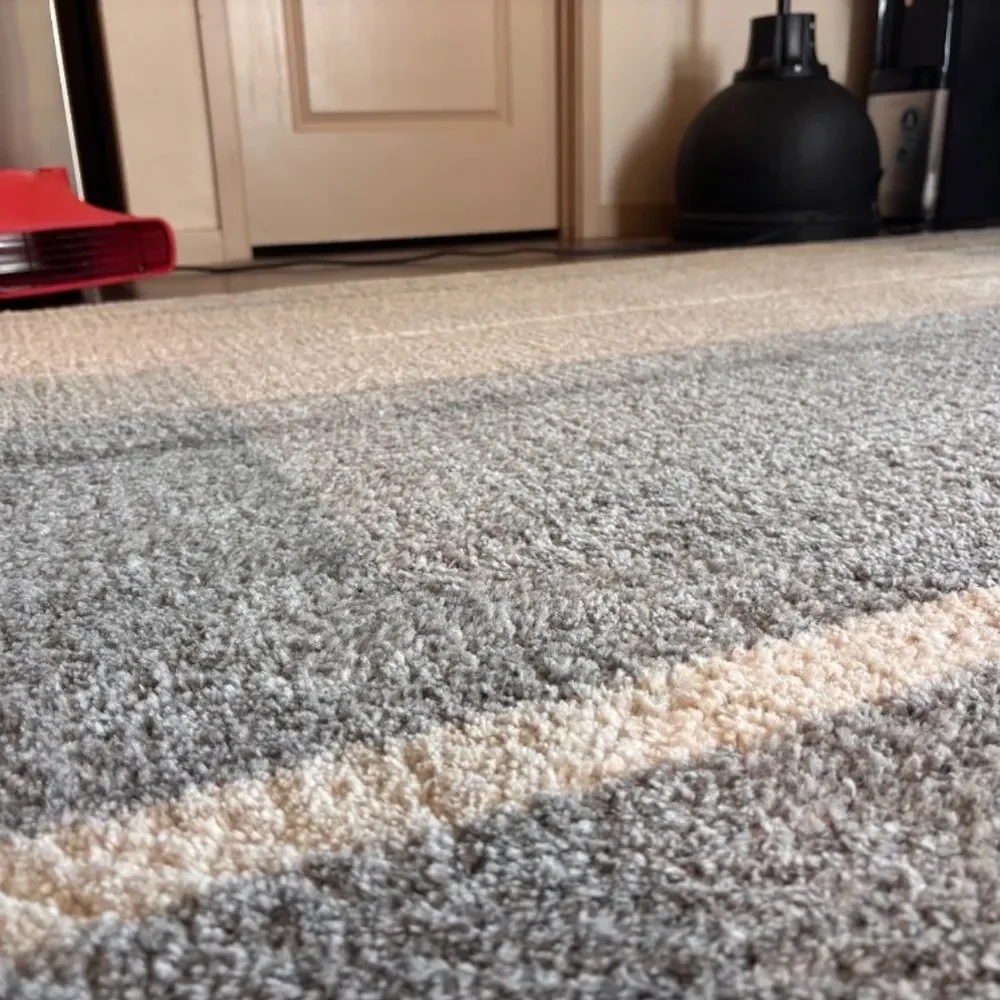
A test you can do right now
Fold a corner of the rug back on itself and snap the pile with your hand.
If grit falls out onto the floor underneath, that is your answer. That material is sitting at the base of the pile against the foundation of the rug, and it cuts at the fibers every time somebody walks across.
It is also why vacuuming feels like it should be enough and is not. A vacuum lifts the top layer. The rest stays down there until something extracts it, and in the meantime it is doing mechanical damage rather than just looking bad.
What is actually in a rug
Three things, and the order matters because it changes how the job has to be done.
Grit, which is the damaging one
Fine abrasive desert material that works down to the base of the pile and sits against the foundation. It is not just dirt, it is doing mechanical damage, cutting at fibers with every footstep. This is why rugs wear out in traffic paths rather than simply looking dull there.
Dust and dander
Settles through the pile continuously. It is the bulk of what comes out by volume and the part that makes a rug look tired rather than damaged.
Whatever has been spilled
Most of it responds. The exceptions are anything that has removed or moved color, and pet urine that has soaked through to the foundation, which is a different problem with its own page.
Signs it is due
- A rug that looks dull even right after vacuuming
- Marks that will not lift with a spot cleaner
- A musty or stale smell
- Matted, flattened pile in the traffic path
- Pet odors that keep returning
- A rug that feels stiff or rough underfoot
How we clean it
- Identify the material. Fiber, construction and dye stability, plus whether the rug is genuinely a good fit for in-home work. This is the step that protects the rug.
- Dry soil removal first. Grit comes out before any moisture goes anywhere near it. Wetting a rug full of dry soil turns it into mud in the foundation of the pile, which is worse than leaving it dirty.
- Pre-treatment matched to the fiber. Wool and synthetic do not take the same chemistry and treating them alike is precisely how rugs get damaged.
- Cleaning and extraction. Controlled moisture and a thorough rinse, because residue left behind pulls soil back in fast.
- Walk it together before anything gets packed up.
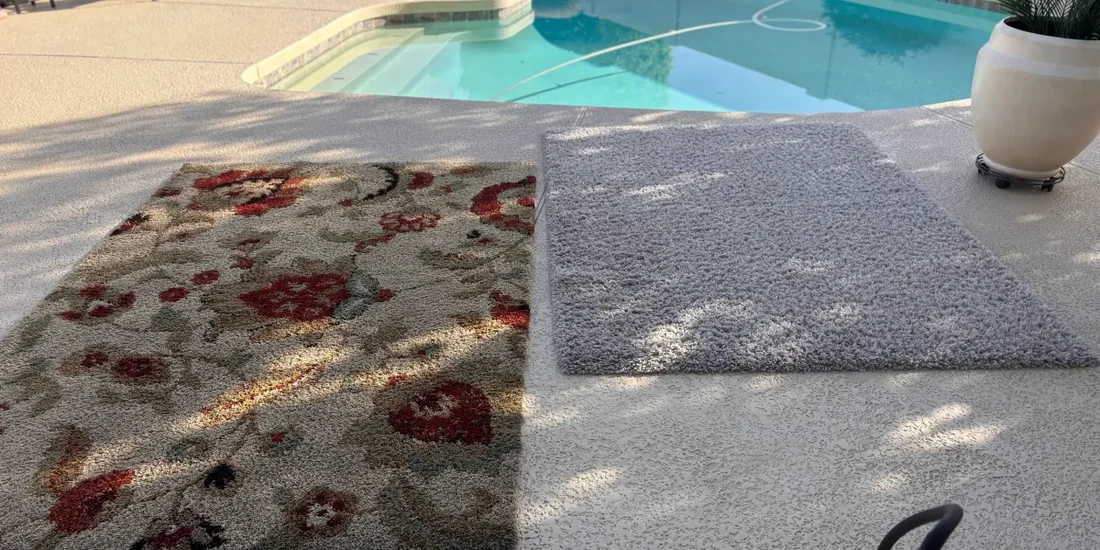
What the visit looks like
Most appointments run one to two hours depending on size and how many rugs there are. We move the furniture off the rug as part of the service.
Rugs are usually dry to the touch within a few hours and dry through within a day, which Arizona's low humidity helps considerably. Thickness and material shift that. Keep pets and children off it until it is fully dry.
How often
Every 12 to 18 months for most rugs, sooner for entry rugs and in households with pets.
The reason is grit rather than appearance. Desert sand is fine and abrasive, and rugs catch it right at the door, which is why entry rugs and hallway runners take the worst of it. Everyone coming in from a driveway drops their load in the first few feet.
That grit works down to the base of the pile where it sits against the rug's foundation and cuts fibers underfoot. A rug is not just looking dull, it is wearing out, and that part is not recoverable once it has happened.
Where we work
Paradise Valley only. 85253.
Camelback Country Estates · Clearwater Hills · Cheney Estates · Casa Blanca Estates · Judson · Finisterre · Palo Cristi · Sundown Estates · Tatum Canyon · Mummy Mountain Park · Paradise Reserve · Camelback Foothills · Desert Fairways · Merrill Heights · Cheney Place · Arcadia Heights · Stonegate · Casa Ynez
Camelback Country Estates · Clearwater Hills · Casa Blanca Estates and Judson · Palo Cristi and Sundown Estates · Mummy Mountain and Cheney Estates · Tatum Canyon and Finisterre
Common questions
What does area rug cleaning cost?
Synthetic $2/sqft, or $1.70 after the 15% off. Wool $3.50/sqft, or $2.975 after. A standard 5x8 synthetic is $68, an 8x10 wool is $238. Add-ons are per rug and not discounted. $150 minimum per visit.
Do you clean in my home or take the rug?
In your home. That suits machine-made synthetics, low-pile rugs in sound condition, rugs carrying traffic soil, and anything large or awkward to move. Where a rug genuinely needs full immersion washing we say so and point you toward a specialist who does that off site.
Do you clean wool?
Yes, case by case. A machine-made wool rug with traffic soil is a good in-home candidate. A hand-knotted wool rug with pet urine or unstable dyes is not, and we will tell you which yours is.
Do you clean viscose?
Not in the home. Viscose is sold as art silk or bamboo silk and is essentially processed wood pulp, which loses strength when wet. There is a page explaining how to identify it and what the options are.
How do I know if my rug needs it?
Fold a corner back and snap the pile with your hand. If grit falls out onto the floor, that is what is grinding at the fibers every time somebody walks across.
Do I need to move furniture?
No, we move it off the rug as part of the service.
How long until we can walk on it?
Dry to the touch within a few hours, usually dry through within a day in this climate. Keep pets and children off until it is fully dry.
Calls answered 7am to 8pm · same-day service usually available
Synthetic $1.70/sqft, wool $2.975/sqft after 15% off.